
Mycelarium Trees: Consumptor and Tree Bases
Use Mycelarium trees properly: Consumptor food payouts, mushrooms built on trunks, and the two-tree defence layout players rely on.
Trees are the largest food reserve on the Mycelarium surface. A Consumptor Mushroom consumes a full tree and converts it into a supply large enough to fund a mid-game expansion. Trees also accept surface mushrooms, which makes them natural outposts: one trunk can hold production and defence at the edge of your network.
The catch is that trees sit where animals walk. A tree base without a Repeller is a buffet. This guide covers the payout, the placement and the defence that keeps the base alive.
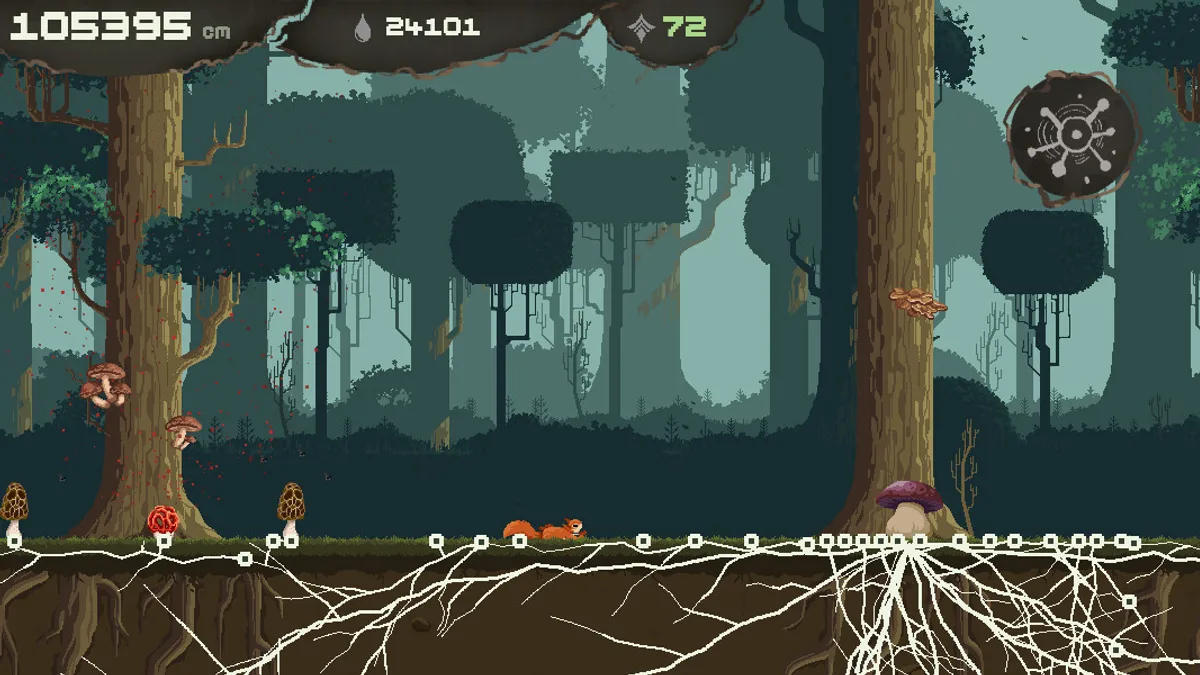
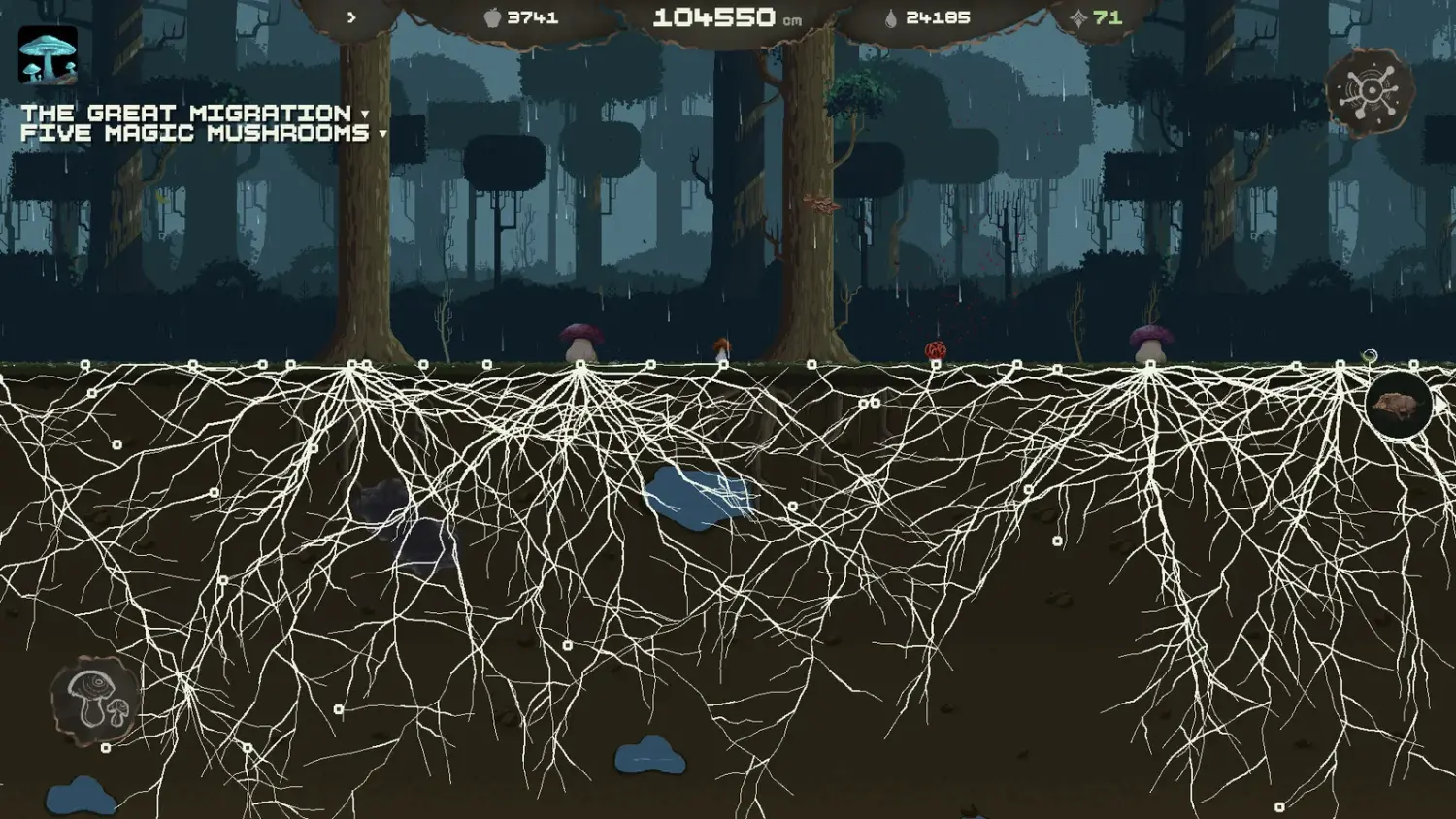
What do trees give you?
Three things:
- Food via the Consumptor. The mushroom consumes a full tree and produces a large payout. The achievement
Like French Friesasks for 15 full-scale trees, which sets the expected scale. - A build surface. The evolution task
Build 2 Mushrooms on treesconfirms that some mushrooms can be placed on trunks. - An anchor for defence. Trees are tall, visually distinct landmarks; players build their surface defence around them.
Trees are not infinite. A consumed tree is gone, so a tree base is a finite reserve with a long production window. Plan the next tree before the current one runs out. The food guide→ shows where the tree payout sits in the wider income curve.
How does the Consumptor work?
Build the Consumptor beside a mature tree and let it work. Its two upgrade branches are Consumptor Speed and Consumptor Yield: speed shortens the cycle, yield increases the payout. For a first tree, speed is usually better because the sooner the payout arrives, the sooner it funds the next project.
Placement rule: the Consumptor must be adjacent to the tree. A Consumptor in open dirt has nothing to consume. If the build option is greyed out, the node is too far from a trunk.
Why build mushrooms on trees?
The task is the obvious reason, but there is a practical one: trees are elevated and visually clear, so mushrooms placed on them are easy to find and defend. A tree base can hold:
- A Consumptor for the payout.
- A Water Mushroom for the local branch.
- A Repeller facing the approach.
- A Stinky Mushroom between two trees.
This is the layout players describe for surface defence: two trees with a Stinky in the middle and Repellers on the outer edges, plus a Water Mushroom at each tree. The Stinky covers the space between the trunks; the Repellers push animals away from the approach.
A Consumptor is a large investment that takes time to pay out. If animals remove it before the first payout, you lose both the mushroom and the tree. Put the Repeller down first.
Where are the best tree bases?
Look for:
- Clusters of two or more trees. A pair supports the Stinky-between-trunks layout.
- Trees near water. A pool shortens the supply line for a Water Mushroom.
- Trees inside the existing network. A tree at the frontier needs its own defence; a tree inside the defended zone inherits it.
- Trees away from the starting mushroom. The starting area is safe but resource-poor; the mid-map trees are the ones worth consuming.
Avoid a lone tree at the edge of the map unless you are prepared to build a full defence package around it.
Do trees block growth?
Trunks are obstacles. The network grows around them, and mushrooms can be placed on them once the node is in range. A tree is therefore both a resource and a piece of terrain; use it to anchor a branch rather than trying to grow through it.
If a shot stops at a trunk, aim around it. Penetration upgrades do not turn trees into dirt.
How many trees should you consume?
One tree funds the early mid-game. Two or three fund a deep push. Fifteen is the achievement, which is a completionist goal rather than a practical target for a single run.
The limiting factor is not the number of trees but the defence and the food storage. Each Consumptor adds a large lump sum; if you cannot spend it before the next payout, the extra trees are wasted.
FAQ
Can the Consumptor consume the same tree twice?
No. A consumed tree is gone. Move the Consumptor to the next trunk.
Can you build any mushroom on a tree?
The task confirms at least two mushrooms can be built on trees. The full list needs testing; start with the Water Mushroom and the Repeller.
Do animals attack trees?
Animals attack mushrooms, including the ones on trees. The tree itself is not the target.
Is the tree base worth it in Survival Mode?
Yes, but the tighter balance means the defence has to come first. A tree base without a Repeller is a loss in both modes.
Official source: Mycelarium on Steam ↗ Official source: Achievements list ↗
The Steam discussions hub ↗ has player reports on tree layouts and Consumptor payouts; the achievement page ↗ shows how rare the 15-tree milestone still is.