
Mycelarium Spores: Wind, Range and Defence
How Mycelarium spore mushrooms work, what the three spore upgrades change, when a long-range shot is worth it and how to keep the landing zone alive.
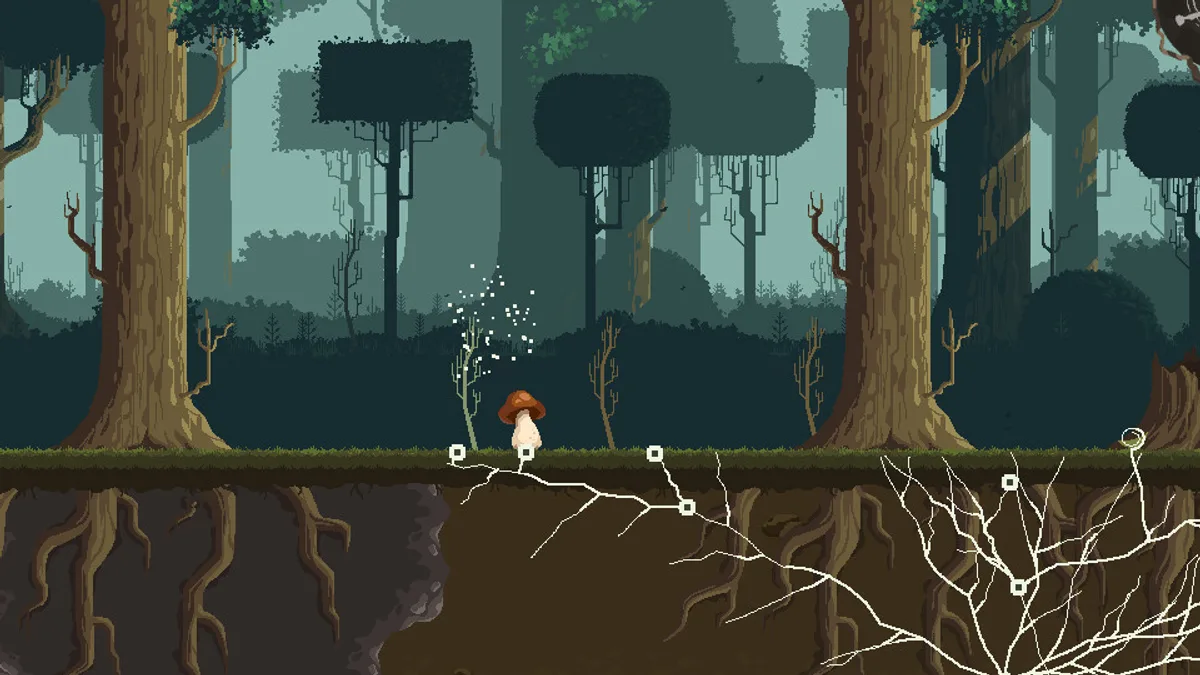
Spores are Mycelarium's long-range expansion tool. Instead of growing across the map, you launch a growth point to a distant location and start a new branch there. The store page calls it wind-carried spores; the Spore Mushroom is the structure that fires them, and its branch has three upgrades that change how many, how good and how light the shots are.
Spores are powerful and easy to misuse. A landing point with no water, no food and no defence is a donation to the animals. This guide covers the mechanics, the upgrade trade-offs and the situations where a spore beats a long walk.
How do you use spores?
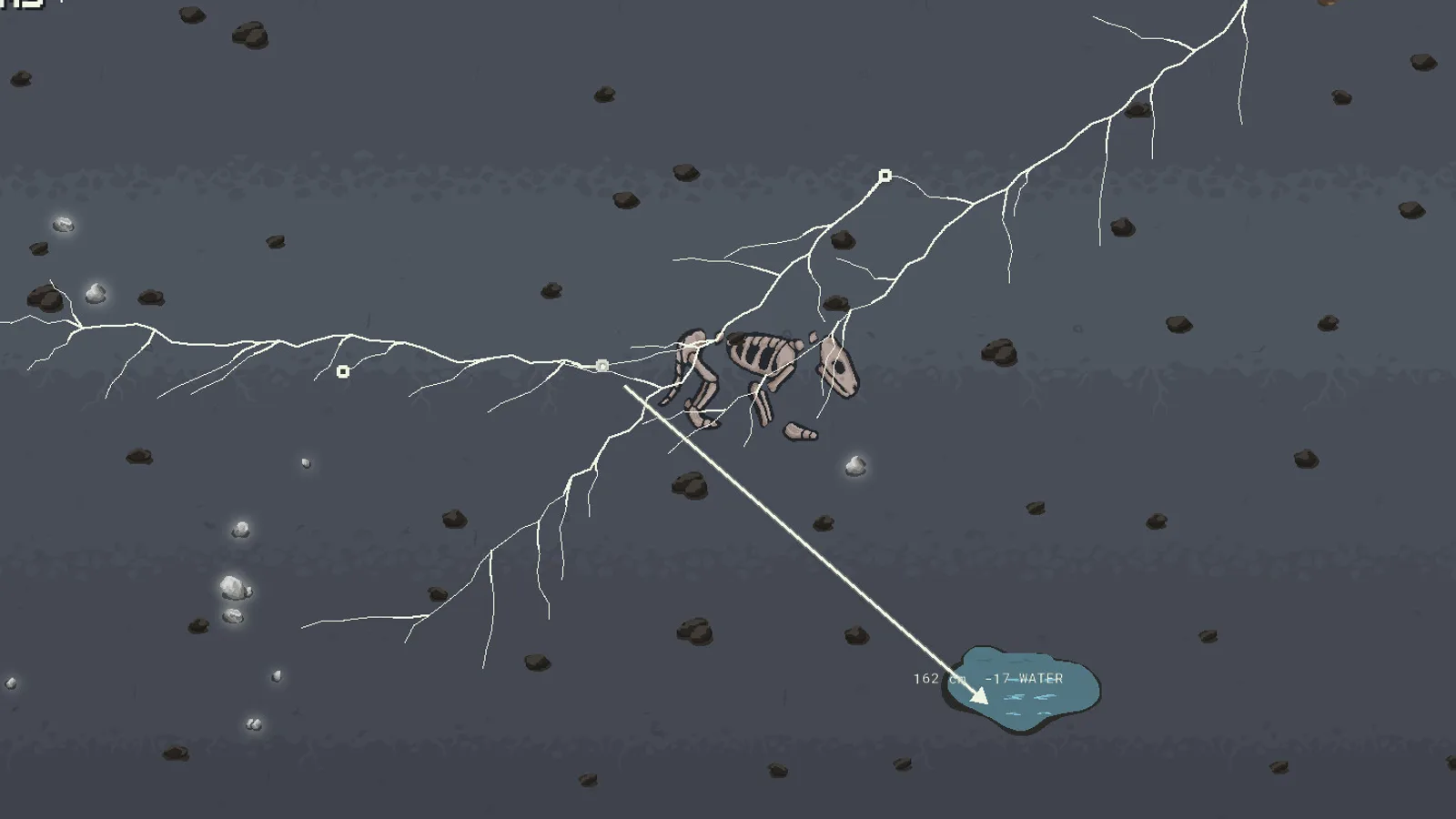
Build a Spore Mushroom on the network, select it, and aim at a distant target. The launch consumes resources and places a new growth point where it lands. From there, the network can expand normally.
The three upgrades in the branch are:
- Spore Count — how many spores a launch produces.
- Spore Quality — the quality of the resulting growth point.
- Spore Lightness — how far the spores travel, according to community reports.
The exact numbers are not visible in the screenshots, so treat the branch as directional: more, better, farther. Buy the one that matches your problem. A target just out of reach needs Lightness; a target that keeps failing to establish needs Quality.
When is a spore better than walking?
Use a spore when the distance is the problem:
- A new layer is visible but the surface route is blocked.
- A water pool sits across a stone band.
- A magic shroom chamber has no connected path.
- A tree cluster is too far to reach before the next rain.
Do not use a spore when the route is merely slow. Walking a branch costs water but keeps the network connected, and a connected network can share food and defence. A spore creates an island until you bridge it.
The best spore targets are places you intend to connect back to the main network. The spore buys the beachhead; the bridge is the real project.
What does a landing zone need?
A viable landing zone has four things:
- Water. Either a pool nearby or a Water Mushroom you can afford.
- Food. A leaf-litter patch, an Absorber, or a connected Predator.
- Defence. A Repeller or Stinky before the first animal arrives.
- A plan to connect. Otherwise the island grows alone and starves.
If you cannot supply all four, the spore is premature. The animals guide→ covers the defence half; the food guide→ covers the income half.
The Spore Mushroom is one of the most expensive builds, and each launch costs resources. A failed spore is not a small mistake; it is a session's worth of food and water. Aim at known targets, not at fog.
How does wind affect spores?
The store page mentions wind-carried spores, and players describe the aiming as affected by the direction of travel. The practical advice is to aim slightly against the wind and to test one launch before committing to a chain.
Wind also matters for surface spread: spores drift over the forest, which is how the game explains long-distance growth. The exact wind model is not documented; treat the first shot of a session as a calibration.
What is the Hedgehog Bus achievement?
Hedgehog Bus asks you to shoot spores from a hedgehog's back. Community reports describe standing on or near a hedgehog and firing, but the exact trigger needs testing. The safe approach is:
- Find a hedgehog on the surface.
- Move the camera to it using the animal tracker.
- Build or select a Spore Mushroom.
- Fire while the hedgehog is under the cursor or adjacent to the launch point.
If the achievement does not unlock, try again with a different distance; the trigger may require the spore to pass over the animal rather than start on it.
Do spores replace normal growth?
No. Spores are a supplement. The main network still grows by clicking nodes, and the main upgrades still improve that growth. A spore-only strategy runs into food and defence limits quickly because every island needs its own support.
The mature pattern is: grow the core, spore to a new resource, connect the island, then grow the core again. The automation guide→ describes how to keep the core producing while you manage the island.
Which spore upgrades should you buy?
For a first spore, buy Spore Lightness if the target is far, or Spore Quality if the target is close but the landing keeps failing. Spore Count is a multiplier for players who spore often; it is the last of the three for a single-target plan.
Do not buy all three before you have fired a single spore. The branch is expensive, and the first launch teaches you more than the tooltip does.
FAQ
Can spores land anywhere?
They need a valid target and enough range. Stone and hard soil may block the landing.
Do spore branches count as network length?
The growth they create does, which means a successful spore can pay back points as well as map access.
Can animals eat a spore?
The landing point is vulnerable like any new growth. Defend it before expanding.
Is the Spore Mushroom required for the ending?
The ending achievement is The Great Migration, and community discussion links spores to the migration narrative. The exact requirement needs testing; do not assume a spore is optional.
Official source: Mycelarium on Steam ↗ Official source: Update 1.02 notes ↗
The Steam discussions hub ↗ has player reports on spore range and the hedgehog trigger; the achievement page ↗ shows the unlock rate for Fly My Darlings and Hedgehog Bus.